What a President Should Be
Last Wednesday, at an appearance at the DHS building in
This is exactly what I mean by member focused. As members we face bully bosses, weak contract language, and bulging work loads; as members, we need someone who speaks for us, who makes our needs and our issues a priority every day. The president is a member, one paid well to work for us full time.
Here’s the breakdown, based on Joe DiNicola’s circumstances: $4,880 per month as tax auditor 2 (top step), $245 per month for vehicle allowance, $400 per month stipend (SEIU provided), $140 flexible medical benefit (which can be taken as cash), and, to my understanding, $257 per month as a salary rider for a special project Joe was involved with at the time he was elected. That’s a grand total of $5,922 per month. Let’s not forget, too, that the president’s union related travel expenses are paid. In Joe’s four years, I rarely saw him, unless he made a special trip or I happened upon
This does not mean he spent his time at home; I know Joe bargained and I know he campaigned. My point is that, for all the compensation, members need a more active champion, somebody who, aside from political activities, makes member needs and member problems the main focus of his or her job. They need someone who will work as hard and as long as it takes to win their fights.
I’ll do that. As president, I plan to travel the state routinely, getting a finger on the pulse of the membership, finding out what’s hurting folks, and trying to fix it. We’ve had years of the same leadership. We’ve had weak contracts, skyrocketing workloads, an increase in bully bosses, two years of pay freezes, overtime lawsuits, and an erosion in public respect for our union—which makes it easier for Sizemore and the Union Facts crowd. Heck, many members have tuned out; 20 percent of our members return free mail in ballots. Can folks who excite that little energy really offer leadership? We see it nationally—failed leadership demanding replacement.
It’s time for a change, a new direction.
I ask for your vote. Let’s change our union and become something in which we can all take pride.
For more information email me at Tonycrac503@yahoo.com
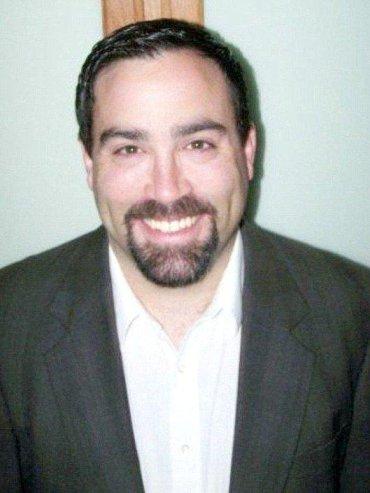
 |  |
Biography
- Born in
- Attended public schools in
- Attended
- Married
- Started state service with DOJ in March 1996.
- Beautiful daughter Lexi born
- Became steward 1999. Since then, I’ve been steward in several offices of DOJ and BOLI, an officer of the Justice local, a
- Adorable daughter Anya born
- Promoted into BOLI
What a union is good for…
- Securing fair pay and benefits, such as pension plans and health insurance.
- Assuring that workers are treated respectfully.
- Advocating for workers' rights and helping to fight unfair discipline.
- Promoting enhanced training of workers.
- Giving workers a united voice in the workplace.
A New Direction
One of the phrases bandied about our union is, “We’re a member run organization.” I’d like to modify that a tad. I’d like to think that we’re a“member focused” organization. This would not preclude active membership or the energetic involvement of members in union action, whether workaday or urgent; it would mean that member issues take priority—over politicking, over the needs or whims of external interest groups. Our union’s focus should be US. We have worksites that can’t get visits from organizers; have worksites without stewards; we have worksites being dominated by bully bosses. We shouldn’t have any of these problems. I intend to make sure worksites have active contact from staff; I intend to encourage vibrant stewardship throughout the state; I intend to fight bully bosses wherever they practice their odious brand of “management.” Mostly, I intend to make sure that every dues paying member of this union feels like he or she is being heard and has a voice.
Another Reason to Keep Our Union Flourishing
On
Unfortunately, Rep. Maurer, and politicians philosophically akin to him, think of state employees as a class of monocled aristocrats who, when not too busy hoarding their vast retirement fortunes, nap at their desks. Here’s an example which might shock Mr. Maurer. A grounds maintenance 2, salary range 17 employee, makes $3,235 per month after nine years of service. By 2012, if we suggest a wage increase of 8% to account for cost of living changes, that worker will make $3,493 per month. If health care coverage premiums continue to rise at a rate of 5 to 6% per year, by 2012 we’ll see premiums of $935 for PEBB members. A 13% portion of that will be $121 per month, or $1,452 per year. Perhaps, $1,452 doesn’t seem like a heap of money to Mr. Maurer. Then again, a grounds maintenance worker 2 does not operate a health care clinic and work as a politician part-time, as the representative does.
We’re all, I think, promoting creative solutions to the health care crisis. Picking out state workers for special attention seems silly. Having seen our retirement plan attacked, our wages fall behind market (after a two year pay freeze), and the constant barrage of misinformation about what we provide as public employees, SEIU members may corner the market on political paranoia. The legislature and the governor need to work together to find solutions for everyone, not solutions that ride the backs of the state’s workers. In my mind, the state, as
For Rep. Maurer, I prescribe a liberal dose of reality.

|
maurer_061308.pdf Size : 0.016 Kb Type : pdf |
How I Define Leadership
Simply put, a leader is somebody whom other people will follow, even into unpleasant situations. A leader makes difficult decisions and explains complex principles in a way that others can understand them. A leader keeps the needs of the team in the forefront of his or her thoughts while grappling with dilemmas and assures that those needs are the driving forces behind the final conclusions he or she reaches.
That’s what I try to do. That’s what I’ve done. Here’s an example. Back in 2000, when Hardy Myers, a man I respect and like, ran for re-election as attorney general, many of us in DOJ’s Division of Child Support were upset with him. We felt that we as employees and the union had supported him in his initial run, and he had expressed to us his support for our bid for higher salaries.
When the issue of wage increases came up Hardy’s support, in understandably political fashion, dissipated. I decided to run for a spot on
Despite heat from union staff, I did not back down. Weeks later, Hardy invited me to a special meeting with him, his campaign director, my DOJ local president, and our former executive director, Alice Dale. Once there, Hardy assured me that he would, in future, pay closer attention to staff’s needs and to how he communicated his own intentions. What’s more, Hardy proved a man of honor. Within a year we were working with management to get the fair pay we’d asked for, and got it.
Leaders get results
More Anti-union Strategery
While driving to work this morning I heard the silliest ad on the radio. An outfit called the Employee Freedom Action Committee is trying to completely distort the value of the EFCA—while, note the trickery, almost stealing the name of what they denigrate (EFAC versus EFCA). “Now the serpent was more subtil than any beast of the field…”
The portrait they paint of the EFCA suggests jack-booted union organizers beating down your doors and demanding signed cards in the deep hours of the morning. My own sense is of heavy whiskers, vinous breath, a few loose “yous guys” and “sign dese cards.” Of course, unions don’t typically employ Edward G. Robinson types to browbeat folks into joining.
Organizers visit people at home to avoid the intimidation tactics of management and to help employees avert coercion. Nothing secretive or underhanded about that. If showing up at someone’s home to tell them how they can get better benefits, fairer treatment, and more economic power is a bad thing, then the world is topsy-turvy.
The fact is that bad bosses and purveyors of greed want to invert reality. 65 percent of Americans approve of unions. There are compelling reasons to join a union. That’s the real fear driving the smear campaign. If people find out how they can empower themselves, bad managers will lose ground and face. The bad bosses want the voters to do their dirty work; they’re willing to lie to get them to do it, too.
Good bosses, and there are plenty, have nothing to fear from the truth or from us, America’s organized labor force.

|
EFCA.doc Size : 0.036 Kb Type : doc |
Misleading Facts
The Union Facts and Employee Freedom Action Committee fill the airwaves with “facts” about union corruption and crime. They cite the hundreds of indictments. The webpage for the former includes a favorite phrase: “in recent years.” One could say, “In recent years the
Here’s a simple fact: one cannot judge an organization by the actions of a few. Is every Catholic a child molester because a few priests have practiced abhorrent behavior? Was every employee of Enron a greedy cad? Generalizations about large groups of people fall apart when cast against the wide range of human character and belief. I’m sure there are union officials and members who do things I’d prefer they didn’t. A quick Google search yields hundreds of charges filed against investment firms, banking executives, CEO’s of non-profit organizations, police officers, and teaching professionals. Should I assume that every brokerage, every executive, every CEO, every police officer, and every educator is a jerk?
One could end up believing that the anti-union groups think all union officials are bad, or that they think union members are invariably witless dupes; worse, that they might find both of these truths to be self-evident. But, I think there’s something more obvious going on here. Anti-union groups don’t care about members, about their money, or about union thugs latching onto it. They care about keeping their own death grips on our money. If workers organize, then they might demand more in wages, in benefits, in dignity. If we elect candidates who promote workers’ rights, that’s a loss for Richard Berman and his ilk. They’re trying to stop us from having a political voice. The moment we achieve parity is the moment they fear more than anything. It means no more bullying, no more coercion, and no more riding the backs of workers to mansions and country clubs.
Sub- Average Joe
In today's email bag I received a nice piece of writing from Robert Gourley, of the Retirees Local 001. In it, Robert spells out the formula for ridding the union of a real embarrassment, Joe Di Nicola. You may recall Joe (no pun intended) as the man who sued our union for overtime pay in the midst of bargaining season. So you might want to note that Joe skipped the kickoff to 2009's session. Hmmm. Go figure.
Mr. Gourley has introduced a resolution for General Council that will remove Joe as our president. If we get him out now, he can't serve as immediate past president and will essentially fade back into the woodwork, like old stain. I sincerely urge everyone at General Council to support MA #2, for those reasons. It will require a 2/3 vote to put the mechanics into play. I will exhort my BOLI delegates to vote for it.
It's time to vote Joe out.
What's on my mind
Several things have happened of late. First, I got a message from Joe DiNicola's attorney. I was asked to clarify the statement above about Joe suing the union. He did not. He sued the state (DOR), forcing them to sue the union in order to recover any loss. I guess that "fact" is significant to some folks. I figure that Joe set the chain in motion, so....
Second, I asked the union to send my campaign materials to all known members' home email addresses. Under the LMRDA, I find this a "reasonable" request. Moreover, it will not cost postage and should reduce staff time. The Elections Committee will review the matter Saturday, the 16th of August, at 10:00 a.m.. Joe cordially invited me. Unfortunately, I cannot attend. This is important because it underlines what I'm all about. I want ideas and a genuine desire to reform this union to decide the election-- not a checkbook. The union must honor reasonable requests under the LMRDA. Please contact them and let them know that you also believe money should not dominate politics, especially in our union.
Third, we still see and hear a lot of scurrile ads about "union bosses" and their corrupting antics. Here's a turn in fair play:
http://wweek.com/editorial/3435/11207/
A Stern Perspective on Change
Earlier this month I requested that SEIU Local 503 send campaign material to members’ home email addresses. Under the LMRDA, or Landrum-Griffin, this is a reasonable request. As a matter of fact, I think it’s more than that; sending out email doesn’t cost money, nor would it gobble up an inordinate amount of staff time.
Linda Delauder informed me this week that the issue, apparently never raised before my trailblazing campaign, should reach resolution at General Council. President DiNicola had invited me last week to attend an Elections Committee meeting this past Saturday. Family plans kept me away. I commend the group for having a fair discussion and not summarily flushing my request. I think this will have far-reaching implications on how our elections play out. We can do innovative things that mitigate the taint of money, or we can stand firmly for the same old system that ensures only groomed candidates win.
Interestingly enough, while at work today, I received a message from Andy Stern. It was an enjoinder to help promote Barack Obama. I have no problem with the content. I think Obama can bring some much needed change to our wizened political features; I think I can do the same for SEIU Local 503, and that’s why I urge the elections committee to meet the letter of the LMRDA and approve my request. Change isn’t just embodied in the person bringing it, but also flows from the methods of innovation and the new approaches that person offers in response to same old same olds.
It’s time for change indeed, Andy.
Report from General Council
I went to the Council today, being held in Eugene-- where, happily, I live and work. My intent was to deliver the speech I wrote and was asked to deliver as part of this presidential election. Because the Council was running behind, my speech and those of my fellow candidates were scrapped. My caffeine fueled hours of preparation availed me little. Though I understand the concept of running late, I must confess a touch of anger over this, as it clearly lends advantage to incumbents, who don't need any help in establishing face and name recognition.
On the good news front, lest I'm chided for curmudgeonly behavior, Linda Delauder told me today that my request to have materials disseminated under the LMRDA received official approval. Now I await only the list of contingencies the Elections Committee has developed. We can chalk one up for Mr. Innovation on this count.
More to come later. The text of my speech, held in abeyance this afternoon, is below. please feel free to print for posterity or for posterior....

|
GC speech.rtf Size : 0.012 Kb Type : rtf |
Upcoming events:
DHS Building, 500 Summer Street, Salem; September 10, during the lunch hour.
EMU, Fir Room, at the University of Oregon; September 17, during the lunch hour.
Bend, hopefully within the next month.
